The Learning in Informal and Formal Environments (LIFE) Center was one of the first four Science of Learning Centers to be funded in the Fall of 2004. LIFE is a an interdisciplinary collaboration between learning scientists at the University of Washington, Stanford University, SRI International, and other institutions across the country.

Recent Center Activity

“Pathways to Excellence and Equity in Science, Math and Engineering Education.”

December 16th, 2008

Tuesday, October 28, 7:00 pm.  Philip Bell, associate professor of learning sciences, gave a special lecture for the UW Alumni Association and the UW College of Education entitled  “Pathways to Excellence and Equity in Science, Math and Engineering Education.”

People learn about science and math in a wide range of settings; classrooms, homes, online communities. As such, education needs to be understood as taking place across a wide range of associated institutions; schools, families, after school clubs. Dr. Bell  examined why these institutions should provide youth with a broad set of life opportunities and choices associated with science and math learning.

Video: Watch Professor Bell’s lecture

Communicating Ocean and Marine Science Research

December 4th, 2008

November 22, 2008.  Philip Bell was the keynote speaker at the COSEE-Ocean Learning Communities and Washington Sea Grant workshop.  The workshop, held at the University of Washington, included formal and informal presentations by marine scientists on current research, training on how to collect and contribute data to the ongoing “Spices in Puget Sound” research with your own “spice sampling kit”, and many opportunities to create connections between marine scientists and marine volunteers around communicating science and research.

Generation Green: Sustainability Takes Root

December 2nd, 2008

November 15, 2008.  Philip Bell was the keynote speaker at the EEAW conference “Generation Green: Sustainability Takes Root” .  A conference which brought together  hundreds of education leaders and stakeholders with a single goal: To inspire and empower through education today’s generations to make decisions today that will promote healthy ecologies, healthy economies, healthy communities, and healthy people for generations to come.

LIFE University Exchange Program: Joan Davis travels to Stanford

November 3rd, 2008

Joan Davis (graduate student, UW) traveled to Stanford University in June to meet with Sandra Okita (former graduate student, Stanford) and her advisor, Dan Schwartz, to learn more about their research on self-other monitoring and the impact of the belief of social interaction (or social expectancy) on learning, and to consult with them about research design for her dissertation. As a result of the visit, Joan is planning to conduct a study that integrates her previous research on person knowledge with their research on the belief of social interaction. In addition, Joan is planning to solicit graduate student and post-doc participation a cross-institution (including LIFE interns) seminar in the Spring quarter that focuses on self-other monitoring and perspective taking in collaborative learning environments and in the design learning technologies.


During Joan’s visit to Stanford, she also met with Vanessa Vega (graduate student, Stanford) to learn more about conducting research studies that incorporate physiological measures. A few months before her visit, Julie Carpenter (graduate student, UW) and Joan had conducted a study to measure people’s physiological response to the design of robots. Vanessa analyzed the stimulus video used and suggested modifications for future studies.

2009 iSLC Conference to be hosted by LIFE

November 3rd, 2008

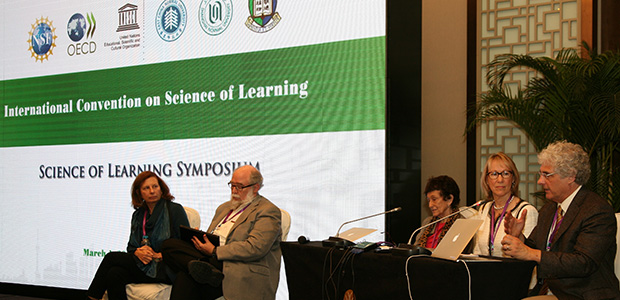
The LIFE Center will host the Second Annual inter-Science of Learning Centers (iSLC) Conference on February 5-7, 2009 at the University of Washington. This conference is designed specifically for junior researchers from the six NSF-funded Science of Learning Centers: CELEST, LIFE, PSLC, SILC, TDLC, and VL2. During this 3-day conference, participants will discuss their common interests for understanding and improving how people learn in a variety of settings and will share and learn about useful methods for conducting research to achieve these goals. The theme for this year’s conference is Social Foundations of Learning: Implications from Research on Brain, Behavior, and Experience.

For more information, please visit our website: http://cns.bu.edu/islc/

UW College of Education Fall Lecture Series

October 21st, 2008

Please join the UW College of Education and the UW Alumni Association for a special lecture by Philip Bell, associate professor of learning sciences. He will be speaking on “Pathways to Excellence and Equity in Science, Math and Engineering Education.”

People learn about science and math in a wide range of settings—classrooms, homes, online communities. As such, education needs to be understood as taking place across a wide range of associated institutions—schools, families, after school clubs. Dr. Bell will examine why these institutions should provide youth with a broad set of life opportunities and choices associated with science and math learning.

When: Tuesday, Oct. 28, 7-8:30 p.m. lecture; 8:30-9 p.m. reception
Where: UW Tower (formerly Safeco Tower) Auditorium, Forth Floor
Cost: FREE, but advance registration is requested

Get more information and register online..
.

Space is limited—please register in advance. You may also register by calling the UW Alumni Association at 206-543-0540 or 1-800-AUW-ALUM.

About Philip Bell
Philip Bell, associate professor of learning sciences at the University of Washington College of Education, conducts ethnographies of children’s learning across social settings. He believes learning science and math is a civil rights issue and that broadening participation in these fields requires a systems approach that starts early.

Read more and register on the Education Lecture Series event page.

LIFE Center Diversity Panel Presentations

September 30th, 2008

The LIFE Center (The Learning in Informal and Formal Environments Center) and the Center for Multicultural Education are proud to present video presentations from two important events related to the work to produce the Diversity Consensus Report. Use the link below to browse the video materials.

The LIFE Center is a research collaboration between the University of Washington, Stanford University, and SRI International focused on transforming our understanding of human learning through a coordinated study of implicit, informal, and formal learning. The LIFE Center shares a common purpose with the Center for Multicultural Education to help all students succeed through education. To this end, we are exploring how we can understand and take into account different forms of learning supported in various contexts, activities, and cultures. The panelists listed as presenters are world-class experts on diversity, education, and learning, and the LIFE Center consensus report, “Learning In and Out of School in Diverse Environments: Life-Long, Life-Wide, and Life-Deep”, is a direct result of their work.

Browse video presentations »

CONFERENCE PAPER: MultiTalker: Building Conversational Agents in Second Life using Basilica

September 6th, 2008

Researchers:

  • Dr. Baba Kofi A. Weusijana, LIFE Sciences of Learning Center, University of Washington, Seattle, WA 98195, USA
  • Rohit Kumar and Dr. Carolyn P. Rosé, Language Technologies Institute (LTI) & Pittsburgh Science of Learning Center (PSLC), Carnegie Mellon University, Pittsburgh, PA 15213, USA

Saturday, September 6, 2008 4:00 PM

The Second Life Education Community Conference 2008, part of the Official Second Life Community Convention 2008 in Tampa, Florida (US) and in the virtual world of Second Life.

Educational Tools and Products (Purple Strand)

MultiTalker prototype and avatars in Second LifeResearchers from the LIFE and PSLC Science of Learning Centers have joined forces to enhance learning in virtual worlds while exploring augmenting the architectures and behaviors of conversational intelligent tutors. Together they have developed a Multi-User Virtual Environment (MUVE) conversational agent called MultiTalker built on top of the Basilica framework to facilitate rapid development of agents that chat with a student group. MultiTalker was demonstrated in Second Life to conference and in-world participants who chatted with it as if they were a student group learning thermodynamics together.

Read the rest of this entry »

LIFE Paper Submitted: Creating Environments for Continuous Learning: Adaptive Organizations & Adaptive Expertise

May 30th, 2008

Authors: Timothy Kieran O’Mahony 1, Nancy Vye 1, John Bransford 1, Michael C. Richey 2, Vivian T. Dang 2, Kuen Lin 2, 3, Moe K. Soleiman 2

1 LIFE Center, University of Washington College of Education/ 2 The Boeing Company, Learning Training and Development/ 3Aeronautics and Astronautics, University of Washington

Click for PDF of submitted paper

Abstract

The rapid pace of change is creating what some call a never ending “skills gap” between what people know at the moment and what they need to know in order to be successful in their everyday lives and the workplace. This raises a number of unique learning and identity issues that workers and their organizations must solve. For example, experienced workers who are used to being “masters of their trades” must come to see themselves not only as experts who have mastered strong sets of skills and knowledge, but as adaptive experts who are willing to ask questions, experiment with new ideas, and learn from their fellow workers as well as from other sources of information. Organizations must provide support for these kinds of changes in attitude, identities and criteria for successful work. The study reported in this paper discusses attempts to help a major company make some of these kinds of changes. The approach we helped them implement involved efforts to organize teaching, learning and assessments in ways that went beyond their current training and focused on characteristics of adaptive expertise such as the willingness to take risks and successfully collaborate by asking questions of, and helping their peers.

Research Roundtable on the Science of Learning

May 20th, 2008

Researchers: Rechele Brooks, Andrew N. Meltzoff, Patricia Kuhl

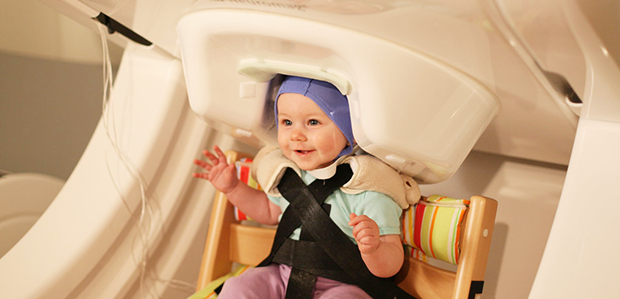
Rechele Brooks takes chief responsibility in organizing and conducting a regular roundtable discussion on the ‘science of learning,’ linking brain and behavioral sciences, with assistance from Andrew Meltzoff and Patricia Kuhl.

I-LABS Research Roundtable

The roundtable draws students from interdisciplinary departments around campus, including not only LIFE members, but those in computer science, linguistics, music, psychology, speech & hearing sciences. Several international and national speakers also attended and presented new work. The 40 events annually draw a total crowd of approximately 1000 attendees.

CONFERENCE PAPER: Language, bilingualism, and the infant brain

April 30th, 2008

Kuhl, P. K. (April, 2008). Language, bilingualism, and the infant brain. McCarty Memorial Lecture, The Rockefeller University, New York, NY.

CONFERENCE PAPER: It’s not just talk: How children learn and how they acquire language

April 30th, 2008

Kuhl, P. K. (April, 2008). It’s not just talk: How children learn and how they acquire language. Parents & Science Lecture, The Rockefeller University, New York, NY.